Essential Tips Swimming Pool Cleaning Achieve Crystal-Clear Water and a Pristine Oasis
Maintaining a swimming pool is a commitment, but it’s a commitment that pays dividends in relaxation, recreation, and the sheer pleasure of a sparkling, crystal-clear oasis. A clean pool is more than just aesthetically pleasing; it’s a safe and healthy environment for everyone who uses it. The foundation of a successful swimming pool cleaning regimen is a combination of regular physical cleaning, consistent water chemistry management, and the proper functioning of your pool’s circulation and filtration systems. Neglecting any of these three pillars can lead to a host of problems, from cloudy water and algae blooms to equipment damage and an unsafe swimming environment. This comprehensive guide will delve into every aspect of Swimming pool cleaning, providing you with the in-depth knowledge and actionable steps required to keep your pool in perfect condition, year-round.
The Pillars of a Pristine Pool: Circulation, Cleaning, and Chemistry
A truly clean swimming pool operates on a simple, yet critical, trifecta: Circulation, Cleaning, and Chemistry. Think of these as the three C’s of pool maintenance. When any one of these is out of balance, the entire system suffers. Proper water circulation ensures that your pool’s water is constantly moving, allowing chemicals to be evenly distributed and preventing stagnant areas where algae and bacteria can thrive. Physical cleaning, which includes skimming, brushing, and vacuuming, removes the visible and larger debris that your filter system might miss. Finally, maintaining the correct water chemistry is the invisible guardian of your pool, ensuring that the water is sanitized, balanced, and safe for swimmers and pool equipment. Mastering all three will not only save you time and money on costly repairs but will also ensure your pool is always ready for a refreshing dip.
The Foundation of Cleanliness: Optimizing Your Pool’s Circulation System
The circulation system is the lifeblood of your pool. It’s responsible for moving the water through the filter, where impurities are removed, and then returning the clean water to the pool. A poorly circulating pool is a breeding ground for problems.
Understanding Your Pool’s Pump and Filter
Your pool pump is the heart of the system. It draws water from the skimmers and main drain and pushes it through the filter. The filter then traps dirt, debris, and microscopic particles. The three main types of filters are sand, cartridge, and diatomaceous earth (DE).
- Sand Filters: These are the most common type and work by trapping debris in a bed of specially graded sand. As the sand gets dirty, its filtration efficiency actually improves, but eventually, the pressure in the filter tank will rise. When this happens, it’s time to perform a backwash to flush out the trapped debris. Backwashing is a crucial part of swimming pool cleaning for sand filters and should be done when the pressure gauge reads 8-10 PSI above its clean, starting pressure.
- Cartridge Filters: These use a pleated cartridge to trap particles. They are known for their excellent filtration capabilities, capturing even finer debris than sand filters. Instead of backwashing, cartridge filters must be manually removed and cleaned by hosing them down. For a more thorough cleaning, they can be soaked in a filter cleaner solution to remove oils and scale buildup.
- Diatomaceous Earth (DE) Filters: DE filters offer the highest level of filtration, often trapping particles as small as 3-5 microns. The filter grids are coated with a fine powder made from fossilized diatoms. When the pressure gauge rises, a backwash is performed, and then new DE powder must be added back into the system through the skimmer.
The Importance of Running Your Pump
To achieve proper water circulation, you must run your pool pump for an adequate amount of time each day. A general rule of thumb is to run the pump for at least 8 to 12 hours a day. The duration can be adjusted based on several factors, including the size of your pool, the temperature of the water, and the bather load. In warmer climates or during heavy use, running the pump for longer periods, or even 24/7 with a variable-speed pump, is highly recommended to prevent algae growth and keep the water sparkling. Proper pump runtime is a non-negotiable step in effective swimming pool cleaning.
The Art of Physical Cleaning: Skimming, Brushing, and Vacuuming
Even with a perfectly functioning circulation system, debris will still accumulate in your pool. This is where physical swimming pool cleaning comes into play. These routine tasks are your first line of defense against a dirty pool.
Daily Skimming
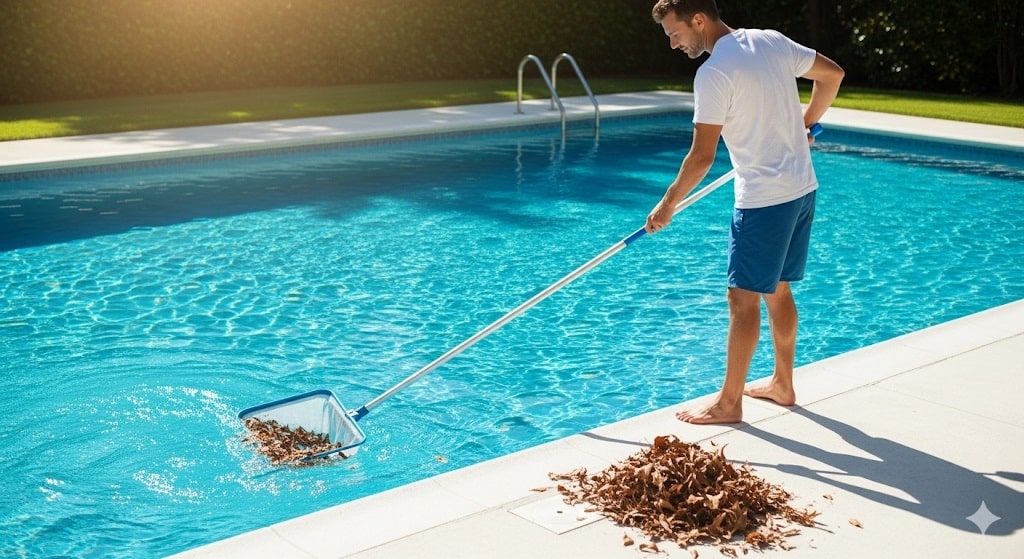
This is the simplest but most important daily task. Use a long-handled skimmer net to remove floating leaves, bugs, and other debris from the surface of the water. Regular skimming prevents this organic matter from sinking to the bottom of the pool, where it can break down and consume your sanitizing chemicals, or get sucked into the skimmer basket and clog your pump. It also keeps your pool looking inviting and pristine.
Weekly Brushing
Brushing the walls and floor of your pool is a critical step that dislodges dirt, grime, and budding algae spores before they can take hold. Use a nylon brush for vinyl or fiberglass pools to avoid scratching the surface. For concrete or gunite pools, a stiffer stainless steel brush is more effective. Pay special attention to corners, steps, and other hard-to-reach areas where water circulation is limited. Brushing essentially “sweeps” the loosened particles into the water, where they can be captured by the filter or sink to the bottom to be vacuumed. This proactive step is an essential part of swimming pool cleaning that prevents major problems down the line.
Regular Vacuuming
Vacuuming your pool is a necessary task to remove the debris that has settled on the bottom. You have a few options for vacuuming:
- Manual Vacuuming: This involves attaching a vacuum head to a telescopic pole and a vacuum hose, which connects to your skimmer or a dedicated vacuum port. It gives you precise control over which areas you clean, making it ideal for targeting specific spots of dirt or sediment.
- Suction-Side Cleaners: These are automatic pool cleaners that connect to your skimmer or a vacuum line. They use the pool’s pump suction to move randomly around the pool, picking up debris. They are a great middle-ground option for hands-free cleaning.
- Robotic Pool Cleaners: These are independent, self-contained units that run on electricity. They have their own internal filter and motor, making them highly efficient. They are the most hands-off option for swimming pool cleaning and can be programmed to run on a schedule, tackling a variety of debris from fine sand to large leaves. Investing in a good robotic cleaner can be a game-changer for maintaining a consistently clean pool.
The Chemistry of a Clean Pool: Maintaining Perfect Water Balance
Even if your pool is physically free of debris, it can still be unhealthy and unsafe if the water chemistry is off. Balanced water is the key to preventing algae, protecting your pool’s surfaces and equipment, and ensuring swimmer comfort.
The Core Chemical Parameters
- pH: This measures the acidity or alkalinity of the water. The ideal range is 7.4 to 7.6. A pH that is too high (alkaline) can cause cloudy water, scale formation on surfaces and equipment, and render your chlorine less effective. A pH that is too low (acidic) can cause eye and skin irritation, and lead to corrosion of your pool’s metal parts.
- Total Alkalinity (TA): This acts as a buffer for pH, helping to prevent drastic fluctuations. The ideal range is 80-120 ppm. If TA is too low, the pH will be unstable and difficult to control. If it’s too high, it can make it difficult to lower a high pH and can also contribute to cloudy water and scale.
- Chlorine: This is the primary sanitizer used to kill bacteria, viruses, and algae. You should maintain a Free Chlorine (FC) level of 1.0 to 3.0 ppm. Free chlorine is the active, sanitizing form of chlorine. When it combines with contaminants, it becomes Combined Chlorine (chloramines), which is responsible for that strong “chlorine smell” and can irritate eyes and skin.
The Importance of Regular Water Testing
You should test your pool water at least once or twice a week, or more frequently during heavy use or after a storm. Use a reliable test kit or test strips to check your pH, TA, and chlorine levels. Making gradual adjustments is crucial. Never dump large quantities of chemicals into the pool at once, as this can shock the system and cause more problems.
Pool Shocking: The Power Treatment
Pool shocking, or super-chlorination, involves adding a large dose of chlorine to your pool to break down chloramines and kill stubborn algae or bacteria. It’s recommended to shock your pool weekly or bi-weekly, especially during the peak swimming season. You should also shock your pool after a heavy rainfall, a large pool party, or when you notice the water is starting to look cloudy or green. Always shock at dusk or night, as the sun’s UV rays can rapidly dissipate the chlorine.
Advanced Strategies for a Truly Flawless Pool
Once you have the basics down, you can incorporate more advanced strategies to take your swimming pool cleaning to the next level.
Algae Prevention and Treatment
Algae is a pool owner’s worst enemy. It can turn a beautiful pool into a swamp in a matter of hours. The best defense is a strong offense: maintain proper water balance, run your pump long enough, and brush your pool weekly. If algae does appear, you will need to take immediate and aggressive action.
- Green Algae: This is the most common type. It makes the water look hazy or green. To treat it, manually vacuum the pool, brush the walls and floor thoroughly, and then perform a triple or quadruple shock treatment. Run your filter continuously until the water is clear, and backwash or clean your filter frequently to remove the dead algae.
- Mustard Algae (Yellow Algae): This looks like a fine, yellow powder that brushes off easily but is resistant to regular chlorine levels. It requires a specialized algaecide and a high-level chlorine shock.
- Black Algae: This is the most resilient type and is a form of cyanobacteria that creates dark spots on the pool surface. It has a protective layer that must be aggressively brushed off with a stainless steel brush before a strong, targeted application of chlorine and a black algae-specific algaecide.
Dealing with Calcium Buildup (Scaling)
In areas with hard water, calcium can precipitate out of the solution and form white, flaky deposits on pool surfaces, especially around the waterline. This is called scaling. The best way to prevent it is to maintain a balanced pH and calcium hardness level. For existing scale, you may need a specialized tile and surface cleaner, and in severe cases, a professional may be required to acid wash the surface.
Investing in the Right Tools
Having the right equipment makes swimming pool cleaning infinitely easier.
- Test Kit: A quality liquid test kit is far more accurate than test strips.
- Telescopic Pole: Get a sturdy one that can reach all areas of your pool.
- Brushes and Nets: Have a good skimmer net for floating debris and a wall brush for scrubbing.
- Vacuum: A good manual vacuum or an automated cleaner is a great time-saver.
- Automatic Feeder: A chlorinator or bromine feeder can help maintain a consistent sanitizer level.
- Pool Cover: A cover, whether solar or winter, significantly reduces debris entry and chemical loss.
The Professional Touch: When to Call an Expert
While regular DIY swimming pool cleaning and maintenance are crucial, there are times when calling a professional is the smartest choice. If you’re dealing with a persistent algae bloom, a complex equipment malfunction, or a chemical imbalance you can’t seem to fix, a professional swimming pool cleaning company has the expertise, tools, and chemicals to get your pool back in shape quickly and safely. They can also provide routine maintenance services, taking the guesswork and labor out of pool ownership so you can simply enjoy your perfectly clean pool.
By following this detailed guide, you will be equipped with the knowledge to maintain a pool that is not only clean but truly healthy and inviting. Consistency is key. A little bit of effort each week goes a long way in preventing major issues and ensures your personal oasis is always ready for a swim. With the right practices, your pool can be the envy of the neighborhood, sparkling under the sun and providing endless hours of fun and relaxation.