Wall Beds That Maximize Space and Improve Comfort
Introduction
Making the most of available space has become an important part of modern home design. Smaller bedrooms, apartments, guest rooms, and multipurpose spaces often need to perform several functions without feeling crowded. wall bed offer a practical solution by providing a comfortable sleeping area that can be folded away when it is not needed.
Also known as Murphy beds, wall beds are designed to store vertically or horizontally against a wall. When properly planned, they can transform a single room into a flexible space for sleeping, working, relaxing, or entertaining. Modern wall bed designs also include storage, shelving, desks, lighting, and other features that improve both functionality and comfort.
What Are Wall Beds?
A wall bed is a bed that folds into a wall-mounted or cabinet-style structure when it is not in use. Unlike a conventional bed, it does not permanently occupy the central floor area of a room.
Wall beds are available in different configurations and sizes. Depending on the design, they can accommodate standard mattress sizes and may include integrated cabinetry around the sleeping area.
The primary purpose is simple: provide a comfortable bed while allowing the room to serve another purpose during the day.
Maximizing Available Floor Space
One of the biggest advantages of wall beds is their ability to reclaim floor space.
A traditional bed may occupy a substantial portion of a bedroom, even when nobody is sleeping. When a wall bed is folded away, that area becomes available for other activities.
The freed space can be used for:
- A desk
- Exercise equipment
- Seating
- Children’s activities
- Hobbies
- Storage
- General movement
This makes wall beds particularly useful in compact homes.
Ideal for Guest Rooms
A guest room may only be used occasionally, leaving valuable space underutilized for much of the year.
Installing a wall bed can allow the room to serve as an office, study, hobby area, or entertainment space when guests are not visiting.
When visitors arrive, the bed can be lowered to create a dedicated sleeping environment.
This flexibility can eliminate the need for a permanently furnished guest bedroom.
Combining a Bedroom and Home Office
The growing popularity of home working has increased demand for multipurpose rooms. A wall bed can help combine an office and bedroom without requiring two separate rooms.
A custom design may incorporate a desk alongside the bed or create storage around the sleeping area.
During working hours, the room can function primarily as an office. At night, it can quickly become a bedroom.
Custom Storage Solutions
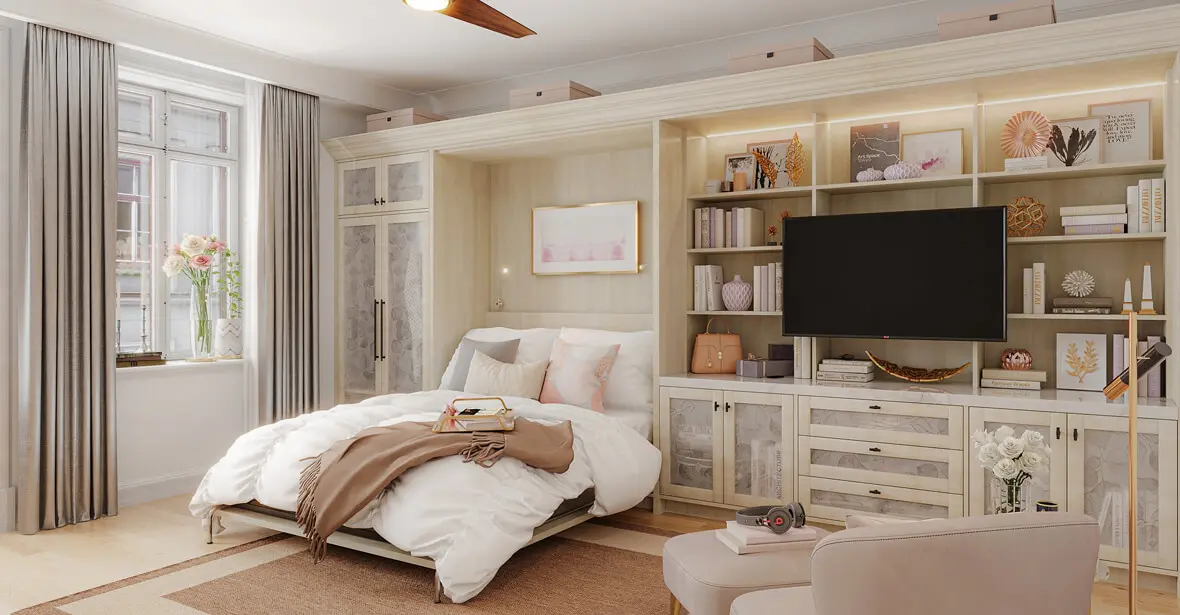
Modern wall beds can be designed with integrated storage.
Cabinetry surrounding the bed can include:
- Shelves
- Drawers
- Wardrobes
- Bookcases
- Display areas
- Nightstands
- Overhead cabinets
This approach creates a coordinated storage system while maximizing vertical space.
For small bedrooms, integrated storage can be particularly valuable because it reduces the need for separate furniture.
Choosing a Vertical Wall Bed
A vertical wall bed folds upward toward the ceiling and usually provides a traditional bedroom appearance.
This configuration works well in rooms with sufficient ceiling height and adequate wall space.
It can also allow homeowners to create storage cabinets or shelving on either side of the bed.
Before selecting this design, make sure the ceiling and surrounding furniture provide sufficient clearance.
Choosing a Horizontal Wall Bed
Horizontal wall beds fold sideways instead of upward.
They can be useful in rooms with lower ceilings or wider walls.
This configuration may also work well in narrow rooms where vertical clearance is limited.
The choice between vertical and horizontal designs should depend on the dimensions and layout of the room.
Improving Sleeping Comfort
Space-saving furniture should not mean sacrificing comfort.
A quality wall bed can provide a sleeping surface comparable to a conventional bed when designed with an appropriate mattress and reliable support system.
Mattress compatibility is an important consideration. Homeowners should verify the recommended mattress size, thickness, and weight before purchasing or installing a wall bed.
Choosing the Right Mattress
The mattress is one of the most important factors affecting sleeping comfort.
Different wall bed mechanisms have specific mattress requirements. A mattress that is too thick or heavy may not work correctly with the folding mechanism.
Memory foam, hybrid, latex, and other mattress types may be suitable depending on the bed’s specifications.
Always check the manufacturer’s requirements before selecting a mattress.
Integrated Lighting
Lighting can make a wall bed more practical and comfortable.
LED lights can be integrated into surrounding cabinets or shelving. Reading lights can be positioned near the sleeping area.
This eliminates the need for bulky floor lamps and provides convenient illumination when the bed is in use.
Motion-activated lighting can also be useful in surrounding storage areas.
Built-In Desks
Some wall bed systems incorporate desks to create a truly multifunctional room.
Depending on the design, the desk may remain available when the bed is stored.
This makes the system especially useful for home offices, study areas, and small apartments.
A built-in desk can also include drawers and shelving for office supplies.
Materials and Design Styles
Wall beds are available in numerous finishes and styles.
Popular choices include:
- Natural wood
- Wood veneer
- Laminate
- Painted cabinetry
- Minimalist panels
- Modern hardware
- Decorative finishes
A wall bed can be designed to complement existing bedroom furniture rather than appearing like a separate piece.
Neutral finishes can create a clean appearance, while wood tones can provide warmth and character.
Safety Features
Because wall beds include moving mechanisms, safety is an important consideration.
The lifting system should be designed for the size and weight of the bed. Cabinets should be securely installed, and the mechanism should operate smoothly.
Users should follow all manufacturer instructions and avoid altering the hardware.
If a bed becomes difficult to open or close, it should be inspected rather than forced.
Planning the Room Layout
Before installing a wall bed, consider the entire room.
Measure the wall, ceiling height, door openings, windows, electrical outlets, lighting fixtures, and existing furniture.
The bed must have sufficient clearance when fully opened.
A professional design consultation can help identify potential layout problems before installation.
Wall Beds for Apartments
Apartments and studio homes can benefit significantly from wall beds.
A single room can serve as a bedroom, office, living area, and dining space when the sleeping surface can be folded away.
This flexibility can make compact living spaces feel more open and functional.
Wall Beds for Children’s Rooms
A wall bed can also provide flexibility in children’s or teenagers’ rooms.
When the bed is stored, additional floor space becomes available for studying, playing, or hobbies.
Integrated shelving can provide storage for books, clothing, and personal belongings.
Safety and age-appropriate use should always be considered when selecting furniture with moving components.
Maintaining a Wall Bed
Regular care can help keep a wall bed functioning properly.
Keep the surrounding area clear and avoid placing objects where they could interfere with the mechanism.
Check hardware according to the manufacturer’s maintenance recommendations.
Do not exceed the specified weight capacity of the bed or integrated storage.
Professional Installation
Professional installation can be particularly valuable for wall beds because they need secure anchoring and accurate alignment.
An experienced installer can ensure the cabinet is properly secured and that the mechanism operates as intended.
Professional installation can also help ensure the bed has adequate clearance when opening and closing.
Conclusion
Wall beds provide an effective combination of space efficiency, comfort, and flexibility. By folding away when not in use, they allow bedrooms, guest rooms, offices, and studio apartments to serve multiple purposes without permanently dedicating valuable floor space to a bed.
Modern designs can incorporate storage, desks, shelving, lighting, and attractive finishes, creating a complete furniture solution rather than simply a folding bed.
The best wall bed begins with careful planning. Consider room dimensions, mattress requirements, storage needs, mechanism quality, safety, and overall design before making a decision. With the right configuration and professional installation, a wall bed can create a comfortable sleeping environment while giving homeowners more freedom to use their available space.